
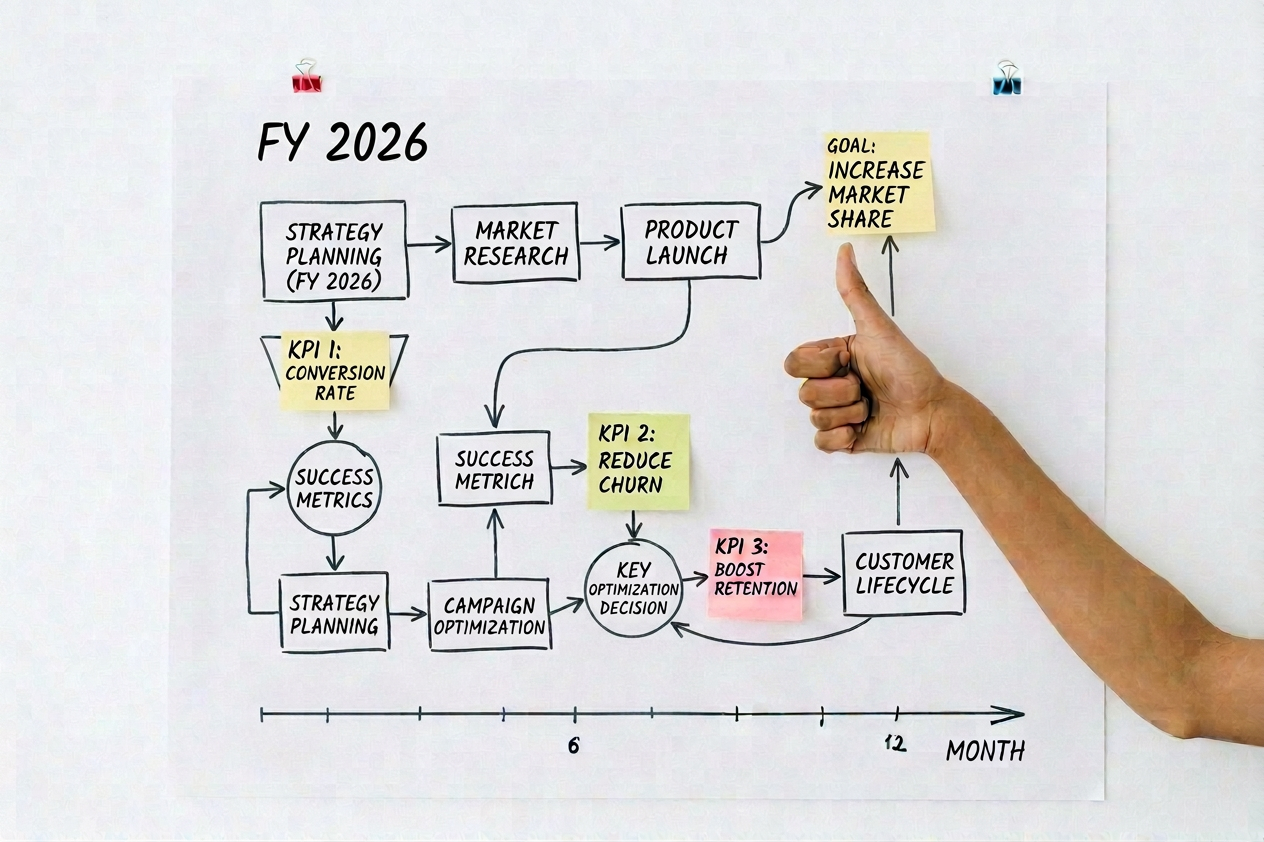
Digital marketers analyze large amounts of data regularly, but what about this data is important? What should be focused on? What is useful? Website clicks, impressions, conversions, and engagement can all provide useful information, but not every metric should be valued as a key performance indicator (KPI). Jackson (2016) explains the importance of connecting measurement to business objectives. A KPI should help determine whether marketing activities area actually contributing to a goal that matters to the organization.
KPIs and Business Goals
Choosing the right KPI begins with the organizations goals. For example, if a company’s goal was to increase online sales, website traffic may be helpful to monitor, but the number of purchases or conversion rate would provide a better indication of whether the company is reaching its actual goal. If the goal is to increase brand awareness, metrics such as reach, impressions, website traffic, or social engagement may be more fitting. DeMers (2020) identifies a wide range of content marketing metrics, which shows why marketers need to choose measurements based on their specific objectives rather than trying to report every number available.
KPIs also help marketers decide what to do next. For example, imagine that a campaign generates a large increase in website traffic but very few new leads. Reporting only the increase in traffic would be misleading, and make the campaign seem more successful that it really is. If lead generation is the goal, comparing traffic with conversions could show that visitors are reaching the website, but are not completing the desired action. The marketing team could then make adjustments and investigate ways to improve that metric.
KPIs and Decisions
Utilizing KPIs to make business decisions can be extremely valuable for organizations and their goals. The HubSpot (2017) Demand Generation Report is one example of how organizations use results throughout the process of attracting and converting customers. Instead of selecting KPIs because they are easy to measure, marketers should focus on measurements that help explain the progress towards reaching organizational goals.
Ultimately, the right KPIs serve a purpose. A company could have a dashboard full of impressive numbers, but those numbers mean very little if they cannot answer whether the business is accomplishing its goals or not. Selecting KPIs that align with business goals allows marketers to move beyond simply reporting activity and use data to understand performance, identify problems, and make better marketing decisions.
References
DeMers, J. (2020, May 5). 50 Content marketing metrics to measure. Meltwater. https://www.meltwater.com/en/blog/50-metrics-to-measure-your-content-marketing-campaign?redirected-path=%2Fblog%2F50-metrics-to-measure-your-content-marketing-campaign
HubSpot. (2017). Demand Generation Marketing Survey 2017 Report . https://learn.snhu.edu/d2l/lor/viewer/viewFile.d2lfile/2383955/14515,1/
Jackson, S. (2016). Cult of Analytics Data Analytics for Marketing (Second Edition). Taylor & Francis.


Leave a comment