
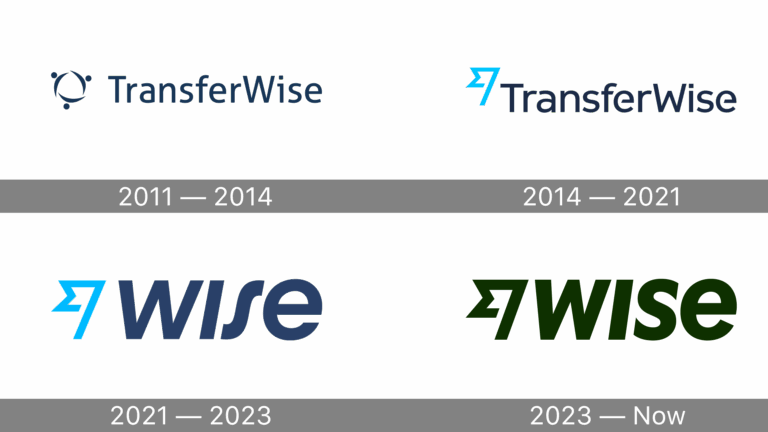
What happens when a company’s name no longer fits it’s purpose? For TransferWise, the name no longer represented everything the company offered, so they changed it, by dropping the “Transer”.
In 2021, the financial technology company rebranded as Wise, demonstrating how a small change in naming can communicate a much larger shift in brand positioning. The decision offers an interesting example of how businesses can adapt their identities without abandoning the values that made them successful.
Name & Purpose: Specific to Broad
TransferWise launched with a clear purpose; making international money transfers more affordable and transparent. Its original name communicated that service effectively, helping customers understand what the company offered.
However, as the business expanded into different currencies, debit cards, and financial services for businesses, the name became increasingly restrictive. Co-founder Kristo Kaarmann (2021) explained that customers needed the company for more than transferring money.
The company’s mission remained focused on making money work without borders. Its broader vision was to create a financial experience where people and business could move and manage money internationally without unnecessary costs, delays, or complications.
The old name worked, it was just outdated for where the company was headed and the improvements it had made.
Why Changing the Name was the Best Strategy
Wise demonstrated effective brand naming strategies that helped in the transitioning process.
Adaptability, distinctiveness, and memorability are important characteristics of brand names (Wheeler & Meyerson, 2024). Wise is short, recognizable, and flexible enough to represent services beyond international transfers.
The company also preserved elements of its existing identity, including its flag symbol, which represents money without borders (Kaarmaan, 2021). This continuity helped communicate that the company’s mission had not changed, even though its name had.
For consumers, the rebrand had offered a broader understanding of what Wise could provide. For employees, partners, and investors, it communicated the company’s expansion and future ambitions. Competitors could also recognize that Wise was positioning itself beyond a single financial service.
However, the transition was not without risks. Changing the name could have created confusion, weakened recognition, and required significant marketing efforts and investments if not successful. Willemyns (2021) noted that Wise communicated the reasoning behind the rebrand directly to its customers, although some opportunities to clarify could have been stronger. This emphasizes the importance of helping consumers understand the purpose and meaning behind company names and name changes.
Strategies to Consider
Based on Wise’s name change, there are two elements that stood out that could have affected the outcome of success.
- Choose a name that doesn’t limit the business.
- A descriptive business name can help customers quickly understand a company’s initial offering, but it may become limiting over time. Harvard Business School Online explains that effective brand architecture should support expansion while maintaining a consistent identity (Heinrich, 2025).
- Make the name meaningful and memorable
- A strong brand name should be easy to recognize while communicating something valuable about the organization. The word “Wise” suggests intelligence, sound judgement, and making better financial decisions.
This association supports the company’s positioning around transparent, convenient international money management. It’s 2026 mission update reinforces this identity through messaging focused on lower fees, faster transactions, and simpler financial experiences (Wise, 2026).
My Thoughts
Wise, is in fact, Wise. The branding decision was smart and evolving, while staying recognizable.
TransferWise successfully communicated the company’s original service, but Wise provides the flexibility the company needs to expand and explore more service options. The rebrand demonstrates preserving core values while adapting to changing technology, consumer needs, and category offering.
Ultimately, they created a strong brand name, that tells customers who they are without limiting who they can become.
References
Harvard Business School. (2025, August 14). How to develop an effective brand architecture strategy. Business Insights Blog. https://online.hbs.edu/blog/post/brand-architecture-strategy
Kristo Käärmann. (2021, February 22). World, Meet Wise. Wise. https://wise.com/en-jp/blog/world-meet-wise
Wheeler, A., & Meyerson, R. (2024). Designing brand identity: A comprehensive guide to the world of brands and branding. Wiley.
Willemyns, J. (2021, March 10). How Wise, formally known as TransferWise, has redefined its brand. Fintech Marketing. https://www.fintechmarketinghub.com/post/transferwise-rebrand-wise
Wise. (2026). Mission update Q1 2026. Wise. https://wise.com/campaign/mission-update-q126


Leave a Reply