
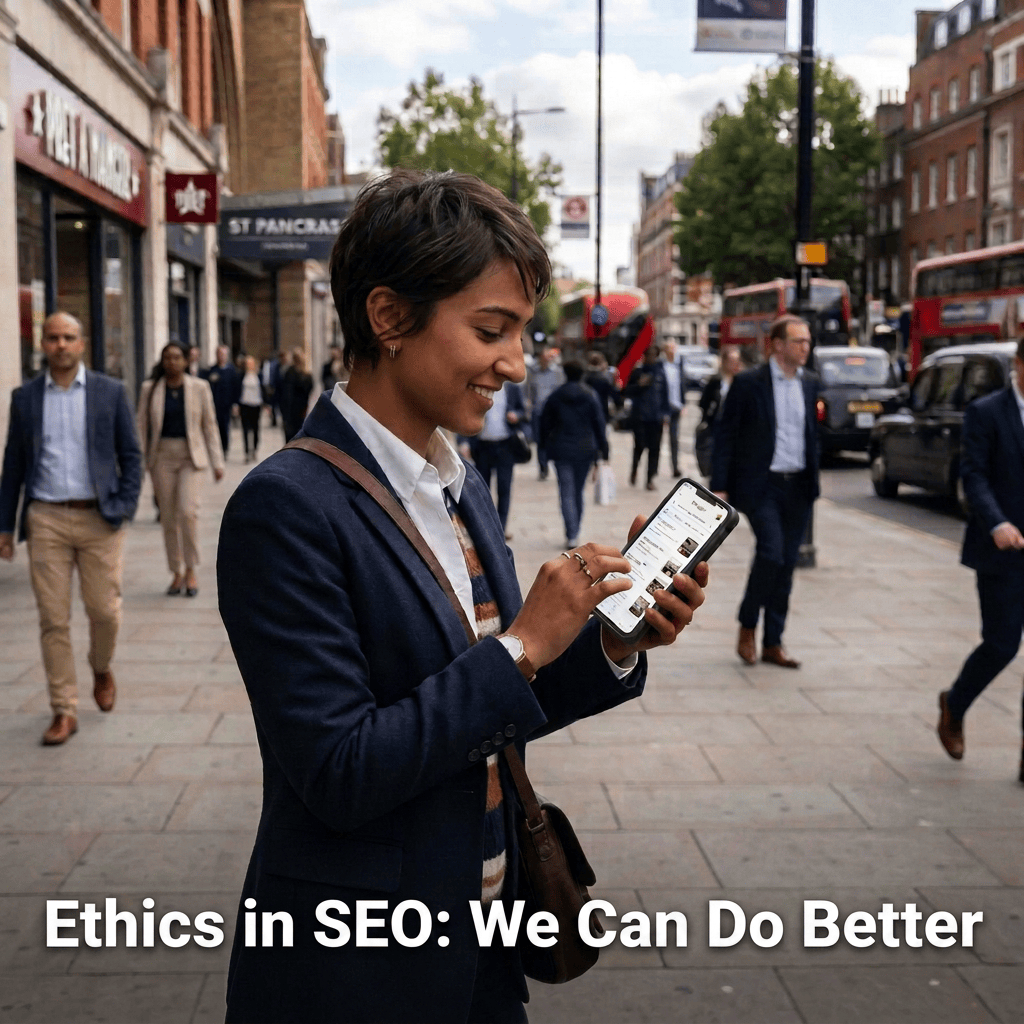
SEO and SEM can help businesses improve their online visibility, but how a company achieves those results matters. Ethical SEO focuses on improving a website while following search engine guidelines and providing value to users. Unethical SEO uses tactics designed to manipulate search rankings, such as misleading content, link schemes, or other methods that focus more on influencing the search engine than helping the customer (Optimus Agency, 2013). While unethical tactics may create quick results, they can also damage a company’s rankings and reputation.
The Hard Way
Overstock.com is a good example of what can happen when SEO crosses the line. The company offered discounts to users of .edu websites in exchange for links back to Overstock. These links could help the website appear more valuable to Google’s search algorithm, but Google considered the practice an attempt to manipulate search rankings. As a result, Overstock was penalized and lost visibility in Google’s search results (Albright, 2011).
This case shows one of the biggest risks of unethical SEO. A business may see short-term improvements, but those results can disappear quickly if a search engine identifies the strategy as manipulation. Albright (2011) explains that businesses using black-hat SEO tactics can experience major drops in traffic once Google discovers the practices. For a company that depends heavily on online customers, losing organic search visibility can have a major impact.
What’s the Difference & What Makes it Better?
The biggest difference between ethical and unethical SEO is the purpose behind the strategy. Ethical practices are intended to improve the website and help users find relevant information, while unethical practices attempt to manipulate the system. Search engines continue changing their algorithms to provide users with more relevant results, making shortcuts an unreliable long-term strategy (Albright, 2011).
Overstock’s broader digital strategy also demonstrates that there are better ways to build an online presence. The company used social media to communicate with customers, gather feedback, provide customer service, promote products, and analyze which messages connected with its audience (Abramovich, 2012). These strategies focus on understanding and engaging customers rather than manipulating search rankings.
For businesses, the benefits of ethical SEO go beyond avoiding penalties. Ethical practices can support long-term visibility, create a better customer experience, and build trust with consumers. My recommendation would be to build for the customer first and the search engine second. Rankings are important, but they are not worth risking a company’s reputation or long-term digital presence for a temporary advantage.
References
Abramovich, G. (2012). Inside Overstock’s Social Strategy. Digiday (USA). https://infoweb.newsbank.com/apps/news/document-view?p=AMNP&docref=news/1560BDA61659BDA0
Albright, M. (2011). Google after search cheats; companies that skew search results in their favor often find the fall is fast and steep. In Gale.com. Times Publishing Company. https://link.gale.com/apps/doc/A250225680/CSIC?u=nhc_main&sid=ebsco&xid=2e8e03b8
Optimus Agency. (2013). Ethical SEO vs. Unethical SEO. In Optimus01.co. https://optimus01.co.za/ethical-seo-vs-unethical-seo/


Leave a comment